GPT-6.1 Terra: what is this model and what does it mean for brands?
GPT-6.1 Terra is OpenAI’s mid-sized model, released on 26 October 2026, designed to run on a computer: it understands what…
Aelo measures brand visibility in AI chatbots with web search enabled, across all four models: ChatGPT, Claude, Gemini and Perplexity. The scan is carried out via the API rather than through the chat applications, and we have been doing so since the very first measurement. This allows us to see not only whether the model recognises the brand from its training, but also whether it finds it online at the time of the query and whether it cites the brand’s website. However, this measurement does not replicate the response that a specific user would see in the app, as it does not take into account their chat history or account. We set the search location according to Brand identity.
Below, we explain why we chose web search, what a single run looks like, and what the limitations of this method are.
Yes, in all four models and from the very first scan. Every question from frozen query set We send requests via the API with the search tool enabled, which each provider makes available to developers: web search on OpenAI and Anthropic, grounding via Google Search on Gemini, and on Perplexity, search is an integral part of every response.
The questions are neutral, i.e. they do not mention any brand names. That is the rule a neutral scan, which we describe in more detail in methodology. The model must specify the brand itself, and we are counting how many times it did so in its responses, in which positions, and which websites it cited in doing so.
Because without a search query, the model responds solely based on the knowledge acquired during training, and this only changes with a new version of the model. Such a measurement will show whether the brand was accurately represented online before the model was made available to users. It will not indicate whether the changes made to the website over the last month are being reflected in the model.
Meanwhile, users are increasingly turning to versions with a search function. OpenAI added a search function to ChatGPT in October 2024, Anthropic added it to Claude in 2025, Gemini uses Google’s search engine, and Perplexity has been a search engine with answers from the outset. Measuring knowledge derived solely from training would mean measuring something different from what the customer actually sees. We describe the brand selection mechanism in more detail in the text How AI chatbots choose the brands they recommend.
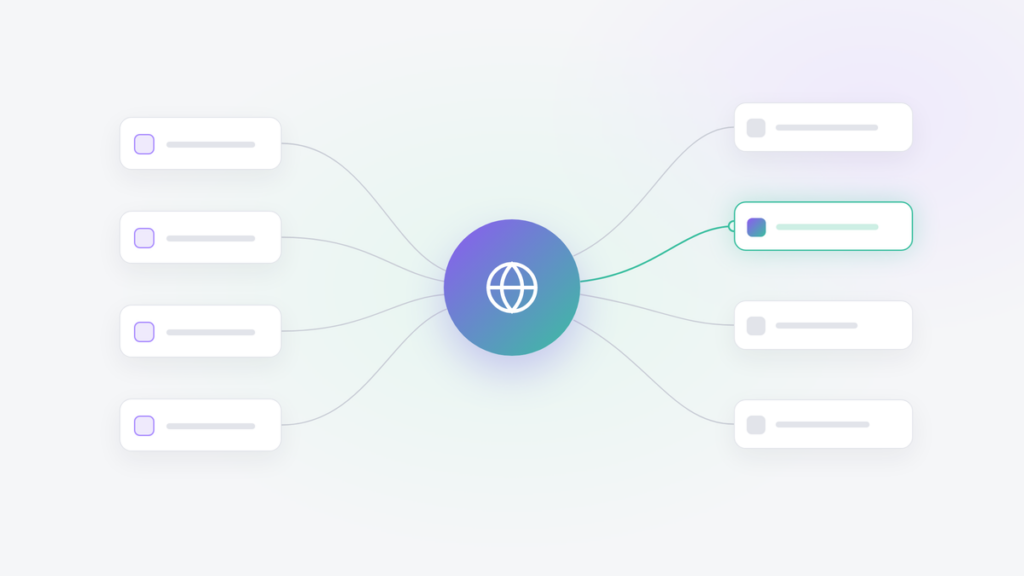
Like a sequence of the same steps, repeated with every measurement. Each phrase, which you are monitoring, is broken down into three questions asked in the same way a customer would ask them. We freeze this set of questions at the first scan so that subsequent measurements can be compared.
We calculate each metric separately for each model. You can find the definitions in the glossary: reference, proportion of responses, citation index and sentiment.
This is because, via the API, every query is sent to the model under the same conditions. The chat app remembers previous conversations, tailors responses to the logged-in user and takes their location into account. Two people asking the same question may therefore receive different lists of brands for reasons that have nothing to do with the brand itself.
The API does not have these variables: it does not know the chat history or the user’s account. We set the location ourselves, according to brand identity. If you fill in the geolocation field, the model searches the results for that location, so a local business may appear in local search results. When the geolocation field is left blank, the search does not specify a city, but rather the language and market based on Brand identity. Consequently, results from subsequent scans can be compared, and any change says something about the brand rather than about the person making the query. The same principle underpins the recommendation that when manual test Ask in a new conversation or via private message.
He demonstrated that updates made on the website are reflected in the models within weeks, rather than only with the release of a new model version. The „Węże” limestone quarry did not feature in any of the 18 questions in the survey conducted on 24 June 2026. After working on their own website, the models mentioned it in 17 out of 18 questions on 27 July and in 18 out of 18 questions on 10 September. Citations During this period, his domains increased from 6% to 50%, and then to 94%. A full description of the initial measurements can be found in the text From 0 to 17 mentions on AI in five weeks.
Such a rapid shift in citations would not have been apparent in a measurement without a search, as none of the models had acquired new knowledge from training during that period. The September measurement also showed how differently the models utilise the web: the brand was mentioned by Claude and Perplexity in 1,00% responses, by ChatGPT in 56%, and by Gemini in 44%. We describe the data in research.
That the page must be accessible to the bots used by AI chatbots at the time the query is made. OpenAI uses the OAI-SearchBot for searches in ChatGPT, Anthropic uses the Claude-SearchBot and Claude-User bots, Perplexity uses the PerplexityBot, and Gemini uses Google Search. If the robots.txt file blocks them, the model may still recognise the brand from its training, but it will stop citing the website in its search responses.
The second condition is that the content must be quotable: the answer in the first sentence of the section, specific figures and conditions, structured data which describe the company. That is what it’s all about AEO, that is, part of a broader GEO. If the model does not mention the brand at all, start with the text ChatGPT doesn’t know my company, and when he mentions the competition, from the text Why does AI recommend the competition?. The effects are delayed, as explained on the website Why do changes take time?.
It does it for you at a steady pace. Module Visibility in AI It sends a fixed set of questions to four models using web search, records the answers and the web pages cited, and displays the results separately for each model. If the assessment reveals a gap, the task is forwarded to Tickets, and you can prepare the content below it in Studio. The way the model describes the brand garners Synapsis. We compare the plans in pricing.
Agencies that track multiple clients can find out more on the website Aelo for agencies, and companies that manage their own websites, on the website Aelo for small businesses.
Yes. In the Aelo scan, ChatGPT, Claude, Gemini and Perplexity provide responses with web search enabled, right from the first measurement.
Not always. The app takes into account the user’s chat history, account and location. The Aelo scan does not include chat history or account details, and we set the location based on Brand identity. That is why the API is better suited to comparing results over time.
Not straight away. The model may still recognise the brand from its training, but it stops citing the website in its search results, and new content no longer reaches it.
Because citations depend on the content on your website, whilst recommendations depend on verification from independent sources. The former changes over a matter of weeks, the latter over a matter of months.