GPT-6.1 Terra: what is this model and what does it mean for brands?
GPT-6.1 Terra is OpenAI’s mid-sized model, released on 26 October 2026, designed to run on a computer: it understands what…
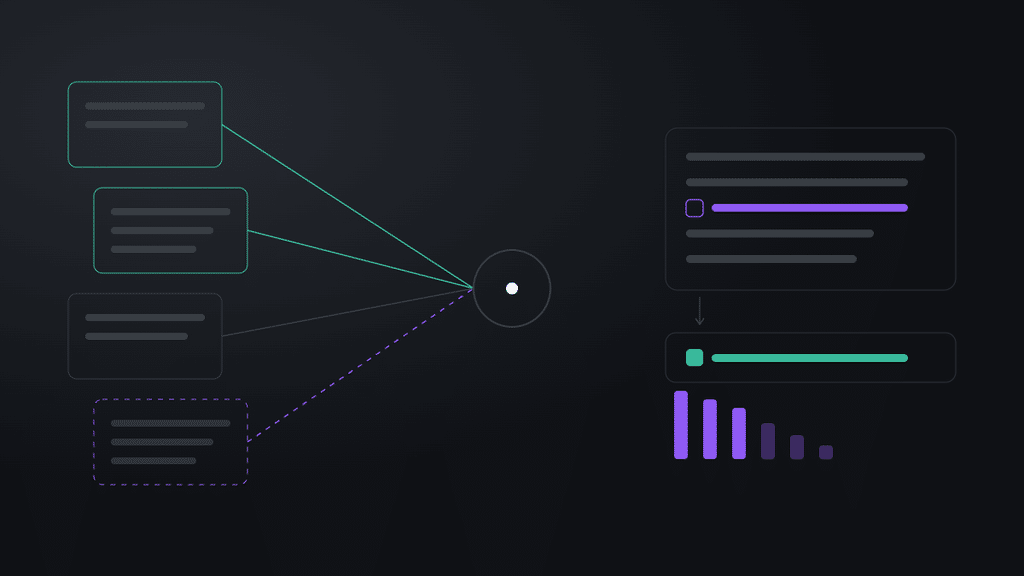
When AI provides incorrect information about a company, the error almost always has a specific cause: out-of-date data used to train the model, conflicting information online, or confusion with a company with a similar name. The response cannot be corrected directly within the model. You need to identify and correct the sources it uses, and then check the effect in subsequent evaluations. Errors in search-based responses disappear more quickly, whilst those arising from training data only disappear with new model versions.
This text is part of the guide Brand visibility in AI: how it works and how to measure it.
Incorrect information is a different problem from a lack of information. If the model doesn’t recognise the company at all, start with the text ChatGPT doesn’t know my company.
The model learns from texts collected up to a specific date. If an address or price list has changed since then, the old version remains in its database. When the model responds without searching the web, it will provide that version.
The website says one thing, a catalogue from five years ago says another, and an old article on a local news site says yet another. The model compiles its answer from multiple sources at once and does not always choose the most recent one. In the AirOps survey of March 2026 ChatGPT only cited 15% pages that it had downloaded, so you have no control over which one it chooses, as long as the old versions are still online.
A company with a similar name, a product named after the brand, an abbreviation used by several organisations. The model combines information about different entities into a single description. The same phenomenon in reverse is described under the entry brand aliases: In the Wapiennik „Węże” case, the models knew the product name but did not associate it with the company.
When facts are lacking, the model sometimes fills in the gaps with something that sounds plausible. OpenAI states that GPT-6 has a better understanding of the limits of their knowledge and tends to speak out more often when it lacks information, but no model is immune to this. The best protection is a website where the facts about the company are stated clearly.
Before you start correcting the data, work out why the AI is providing incorrect information about the company. The following four tests will help you do this:
The following explains how to prepare such a test so as not to skew the result: How to check whether AI recommends your brand.
In this order, because each subsequent step builds on the previous one:
Once you’ve made the changes, ask search engines to revisit the page. Bing does this by Bing Webmaster Tools, and its index is relevant to ChatGPT and Microsoft Copilot. Google states in AI function documentation, …that AI Overviews and AI mode use the same index as regular search results.
Chatbots have buttons for rating responses and the option to explain what is wrong. This serves as a signal to the provider, but it is no guarantee that the response will change, nor does it replace the need to improve the data sources. As long as there is conflicting data online, the model may revert to it.
It depends on where the error originates. If it stems from a search, the change will take effect once the search engine has refreshed the corrected pages and the model encounters them in subsequent queries. If it stems from the training data, the error may persist until a new version of the model is released. An example of such a change is GPT-6, which has been in use in ChatGPT since October 2026; we discuss this in the text GPT-6 in ChatGPT: what it means for brand visibility. He explains why the effects are delayed Why do changes take time?.
By regularly checking what the models say about the company. If an AI provides incorrect information about the company once, and the source of the error remains online, the model may revert to it after every update. In Aelo, you can add phrases containing the brand name to the measurement, which we track separately from category phrases. This allows you to see how ChatGPT, Claude, Gemini and Perplexity describe the brand when someone asks about it directly, and whether the error has been rectified. The results are fed into the knowledge graph Synapsis, which is built using the information you provide, scans and citations; one of its sources is the ‘Brand Identity’ form, where you enter up-to-date facts about the company. On this basis, we prepare tasks in Tickets. It’s up to you to decide which parts of this you’ll put into practice.
You can carry out the first measurement free of charge; we explain how to do this in the text Free brand visibility measurement using AI. Agencies that manage data for a large number of clients can find out more on the website Aelo for agencies, and local businesses on the website Aelo for small businesses.
This is usually because the old address is still online: in a directory, on Google My Business, or on an out-of-date subpage. The model may also have picked it up from its training data. Update all sources and check which pages the search result links to.
Not always. If the old data also appears in directories, on social media or in Google Business Profile, the model may continue to use it. Having your own website is the first step, but the error will only disappear once the conflicting sources have been removed.
Chats have buttons for rating responses, which can be used to report an error, but this is merely a notification, not a guarantee that the error will be corrected. It is more effective to correct the sources used by the model.
If the information is incorrect, the model recognises the company but relies on inaccurate or out-of-date sources. If there is no information, it does not recognise the company at all or is unable to find it. The first issue is resolved by improving the sources, whilst the second is addressed by building an online presence from scratch.